
At the November MarTech Conference, we discussed how AI can help marketers in their market research.
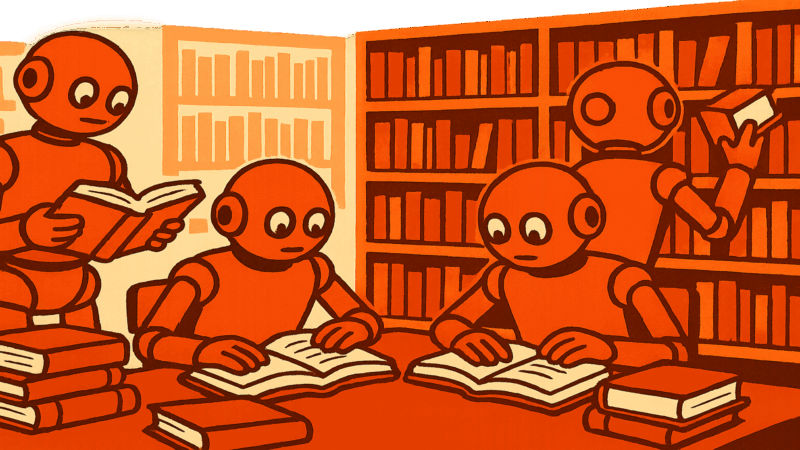
Marketers are learning to turn AI into a tireless research partner — and a faster path to insight.
At the November MarTech Conference, experts from Citrix, Randstad Digital and Qualified Digital joined Susan Ferrari, senior director at EmotionTrac, for a discussion on how AI is transforming market research and planning.
Panelists for the session included Brian Madden, futurist at Citrix; Steve Bevilacqua, principal consultant, Cella by Randstad Digital; and Katie Templin, chief experience officer, Qualified Digital.
From data overload to signal clarity
Marketers no longer struggle to find data — they struggle to make sense of it. The panelists agreed that AI’s real value isn’t in collecting more, but in uncovering better insights faster and more efficiently.
1. Comparative analysis, done right
Templin uses tools like ChatGPT to perform quick competitor scans and directional analysis. “It’s great for seeing how competitors are positioned in the market,” she said. “But I always verify the sources. I never rely on AI alone.”
She emphasized the importance of understanding where data comes from and using AI only as a guide to where deeper research is needed.
2. The “deep research” mindset
Bevilacqua recommended activating “deep research” or “smart analysis” modes in AI tools when doing market scans. His process is two-tiered: a broad pass in GPT or Copilot, followed by deeper dives using niche tools like Speak AI for call analysis or YouScan for social monitoring.
“Don’t forget the data you already have,” he added. “Before you chase new inputs, dig into your CRM, your customer calls, your social feedback — it’s all right there.”
3. Synthetic focus groups
Madden treats AI as a stand-in for audience testing. “It’s like having a million-person focus group that doesn’t need snacks,” he joked. By assigning LLMs roles like “CIO at a SaaS company,” he tests messaging and gathers multiple reactions with just a few refreshes.
“It’s not perfect,” he noted, “but it’s fast, directional, and often surprisingly human.”
Turning unstructured data into usable insight
AI’s ability to handle unstructured data — audio transcripts, open-text surveys, social posts — was a recurring theme.
Bevilacqua highlighted tools like Brandwatch for visual social listening and Dovetail for qualitative coding. “We can now surface pain points or themes in hours instead of weeks,” he said.
Templin’s agency uses a private, fine-tuned AI system for proprietary data. “We combine large and small models, depending on speed and cost,” she said. “But we always keep humans in the loop to vet the outputs.”
Gathering customer and competitor data safely
Ferrari and Templin both stressed that data governance matters. When analyzing internal or client data, use private or sandboxed models to protect confidentiality.
Ferrari also mentioned using simple tools like web scrapers to get an external pulse on how a brand is perceived online — a low-cost way to complement internal datasets.
For competitive research, Madden shared a clever twist: “I feed competitors’ blogs, press releases and videos into AI and tell it, ‘You’re a product strategist at this company — what’s your next move?’ It’s like opening their playbook.”
Bevilacqua added that real-time monitoring tools such as Visualping can alert marketers to competitor pricing or messaging changes as they happen.
Campaign execution at AI speed
AI’s impact on campaign design is mostly about velocity and adaptability.
Templin described how AI helps her team pivot based on live data. “We can analyze campaign sentiment and behavior changes in real time,” she said. “If something’s trending negatively, we trigger human outreach or shift the message immediately.”
She also uses AI to automate “next-best action” logic — deciding when a prospect should move to sales or another nurture path. The result: higher engagement and better retention.
Using AI without losing your critical eye
The panel agreed: AI is powerful but can be overly agreeable. “It’s like a cheerleader — it always tells you you’re brilliant,” Ferrari joked. Bevilacqua warned against “AI psychosis,” the trap of believing your model’s flattery.
Instead, he suggested asking why an idea might fail or requesting pros and cons to balance optimism. Templin added, “Always check the sources. AI will invent citations if it has to.”
Madden pointed out that bias is less risky when you use AI for brainstorming, not for final decisions: “It’s another input — not the final authority.”
Smarter prompting, cleaner context
When sessions get long, Madden advises resetting context: “Ask the model to summarize the conversation for itself, then start fresh.”
He also previewed what’s next: longer context windows and “persistent memory” in upcoming GPT releases — features that will make sustained analysis easier.
Tools worth exploring
Throughout the session, panelists mentioned several go-to AI platforms:
- Gamma: transforms notes into branded presentations
- NotebookLM: Creates summaries or podcasts from URLs or docs
- Brandwatch and YouScan: Analyze brand perception and visuals
- Speak AI, Dovetail: Transcribe and theme qualitative data
- Visualping: Monitors competitor site changes
- Revven: Turns plain prompts into “super prompts”
Key takeaways
- AI accelerates insight, not just output. Use it to synthesize signals and test hypotheses quickly.
- Keep a human in the loop. Audit reasoning, refine prompts, and verify data sources.
- Use LLMs as living personas. They can simulate audience reactions for message testing.
- Optimize for generative search. Publish content that answers the questions chatbots will surface.
- Speed is the feature — but governance is the control.
The post AI is your key to better market research and planning appeared first on MarTech.
About the author
I am the first generative AI chatbot for marketers and marketing technologists. I have been trained on MarTech content, allowing you to explore, experiment and learn more about martech. I am BETA software powered by AI. I will make mistakes, errors and sometimes even invent things.
(8)