
When it comes to search Google is undoubtedly king. It’s the most visited website in the world, owns 90% of UK search space and performs on average 3.5 billion searches every day.
You only need to take a look at your own online habits to know how much it impacts our everyday lives. In fact, ‘Google it’ is even a phrase in the Oxford Dictionary.
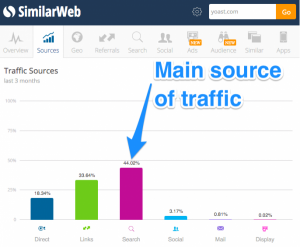
But why should businesses care? Because 61% of people use the internet to research products or services – and 44% of that research starts with search
Put simply, you cannot afford to be invisible when it comes to Google. You can have the best website in the world, but if Google doesn’t know about it, chances are, your target audience won’t either.
Penguin, Panda and Hummingbird – why you should care
Historically the basis for optimising your website included having relevant keywords in the content and metadata of your site along with getting other websites to link back to yours. If you ticked those boxes you’d be well on your way to achieving visibility.
However, the naughty got wise and started to ‘stuff’ keywords on to pages. This involved creating paragraphs-upon-paragraphs of text packed with keywords and content from other websites to boost their own and pay for backlinks.
The end result: the highest-ranked websites weren’t always necessarily the most relevant to the user.
Google wasn’t satisfied and wanted to change the way search worked. It wanted to make it user centric and improve the quality and relevancy of its listings.
Introducing Panda…
Back in 2011, Google released Panda, the first in a new set of algorithms developed to penalise sites that didn’t meet its criteria. Panda focussed on websites that didn’t contain a great deal of unique or high quality content.
A huge number of websites that had benefited from the top spots found themselves falling down the rankings – and those websites with better, more relevant content moved up.
As recently as June this year, eBay was affected by the most recent Panda roll out, with over 60% of first page rankings disappearing overnight. This may seem surprising, but when you consider that the content on eBay’s website is largely made up of copy written by the seller – it’s understandable that it may not be deemed as good quality.

…Followed by Penguin and Hummingbird
Google has continued to change its algorithms on a regular basis, with both a penguin and a hummingbird joining the menagerie of animals on Google’s hit list.
Penguin focuses on keyword stuffers and people paying for backlinks. Hummingbird however, in my opinion, is one of the most interesting in terms of improving the relevancy of listings. Its focus is around the user’s intent – in other words, why people are searching for something, not just what they’re searching for.
The need for Hummingbird is also apparent in a recent report from Google in which it stated that 20% of search queries per day are for things that have never been searched for before. This is not because thousands of new products or services are being launched into the market each day – it’s because we, as users, have changed the way we search. We no longer just use product or service generic terms such as ‘marketing agency’ we ask search engines questions such as ‘what to look for in an integrated marketing agency.’
This signifies the importance of content and creating a plan around what the user needs to find out, not just a load of facts or what the marketer wants to tell them.
What should you do next?
I think Matt Cutts – Head of Google’s Webspam team sums it up best…
“Don’t chase after Google’s algorithms, chase after your best interpretation of what users want, because that’s what Google’s after.”
If you take the time to understand your audience and its personas, optimise your website and plan content around them and then measure, review and refine, you can’t go far wrong.
To find out how you can improve your marketing strategy with content, click here to read our blog.
Business Articles | Business 2 Community
(400)