
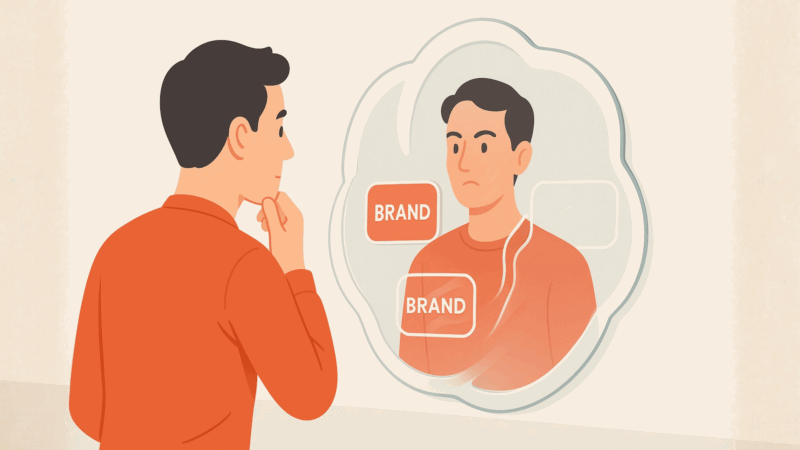
AI tools surface what’s said about your executives and brand. Build strong, consistent profiles to maintain credibility and influence perception.
Few technologies have reshaped consumer behavior as quickly as ChatGPT. Launched in November 2022, the conversational AI tool gained 100 million users within two months. It now engages more than 190 million people daily, processing more than 2 billion queries. OpenAI has released more than 20 updates to expand its capabilities, transforming ChatGPT into a dynamic platform that generates articles, code, images, videos and more.
What began as a chat interface is now an everyday research companion for audiences making decisions, comparing products and evaluating brands. Its meteoric rise shows how user research journeys have fundamentally changed — and why brands must evolve to stay visible. In a search environment shaped by AI, traditional strategies for visibility and success are no longer enough.
ChatGPT’s role in the new search landscape
ChatGPT’s role has evolved over the past three years, shifting beyond just a productivity tool into a trusted assistant for everyday life. Recent research shows that 77% of users leverage ChatGPT as a search engine and 30% trust it over other search engines, including Google.
ChatGPT directs much of the information that consumers, employees, shareholders and more are learning, including narratives about your brand. This means brands that don’t extend their marketing focus to encompass AI tools risk being defined by ChatGPT and other AI search tools, instead of directing the narrative themselves.
This presents a narrative control challenge. Since ChatGPT pulls from readily available live web content, brands with a weak digital footprint are excluded from the chance to inform responses.
Competitors, negative media coverage, outdated sources, misinformation and user reviews fill any narrative gaps that the brand abdicates. Without strong narrative ownership, brands quickly become susceptible to misinformation, misrepresentations and out-of-control crises.
Moreover, executive reputation is closely tied to brand perception, as leaders’ names often appear alongside brand responses. Brands that haven’t optimized their leadership’s digital footprint for resilience and positive visibility stand to lose consumer trust and market value. Without action by the brand, consumers either discover damaging information or find nothing at all.
Winning strategies for brands in ChatGPT
Over the past three years, we’ve researched how brands can influence ChatGPT to drive more ownership over their visibility. In a program that evolves regularly, there has been relative consistency in the best ways to influence brand visibility within it.
We’ve found that brands can control their online narrative in ChatGPT by starting with optimized brand-owned assets across their digital ecosystems, like websites, social media, thought leadership and executive profiles.
Another critical piece is investing in third-party sources that are valued by ChatGPT to boost credibility. Content about your brand and its leaders must be accurate, authoritative, consistent across platforms and structured for AI discoverability to maintain preferred visibility in ChatGPT.
Maintaining that visibility requires constant monitoring. Proactive and AI-inclusive reputation management can help brands identify and counter misinformation in AI, whether about the brand itself or its executive team. Ongoing risk monitoring within the AI space and content optimization minimizes emerging threats to maximize control and ultimately drive visibility with audiences.
ChatGPT and the future of brand visibility
The enormous success of ChatGPT, as it continues to grow into 2026, fundamentally changes the digital marketing landscape, search and beyond. With more complex updates and capabilities on the horizon, plus the advent of agentic AI, ChatGPT will become embedded into everyday life.
This new way audiences find information and research brands forces marketers to evolve, adopting new tactics and strategies to connect with consumers within AI itself. As adoption continues to skyrocket, brands need a foothold in AI platforms to influence the visibility, sentiment and reputation audiences perceive.
Brands will always need to be present in search and other channels, but without control and influence in AI, they’ll find it increasingly difficult to build and maintain trust and authority online.
In this new era, the brands that proactively defend, monitor and optimize brand and executive visibility will be the brands that last. It’s either that or cede the narrative to AI platforms, third-party content and detractors.
The post What ChatGPT says about your brand — and why it matters appeared first on MarTech.
About the author

Shannon Reedy is the Chief Brand Officer at Terakeet, the preferred brand enablement partner for Fortune 500 brands. With a demonstrated history of leadership, data analysis, and results-driven business development, Shannon has helped Terakeet, as well as its global customers, achieve breakthrough performances. As CBO, Shannon guides Terakeet’s brand growth and supports its revenue-generating processes, including marketing and communications strategies.
(7)