
 Victor Iryniuk — March 26, 2018
 — March 26, 2018
There’s been a lot of talks lately that email marketing is either dead or dying. It seems that we no longer trust emails. And, frankly speaking, browsing through your inbox has become quite a tedious task. Now you have to dig useful and needed emails out of the huge pile of garbage, namely promotions and spam.
These days you can find a lot of communication channels to invest your money into, such as social media, search engine optimization, link building, and so on and so forth. Maybe, email marketing is no longer among top priorities of lead generation.
We wanted to answer this question ourselves. Take a look at what we’ve found out.
1. Email tips and tricks
One of the main purposes of emails is to deliver value. That’s why instructional letters perform very well. Here’s what you can share:
- hacks on how to use your product;
- tips on something related to the industry;
- expert opinions about your product or the type of solutions you provide.
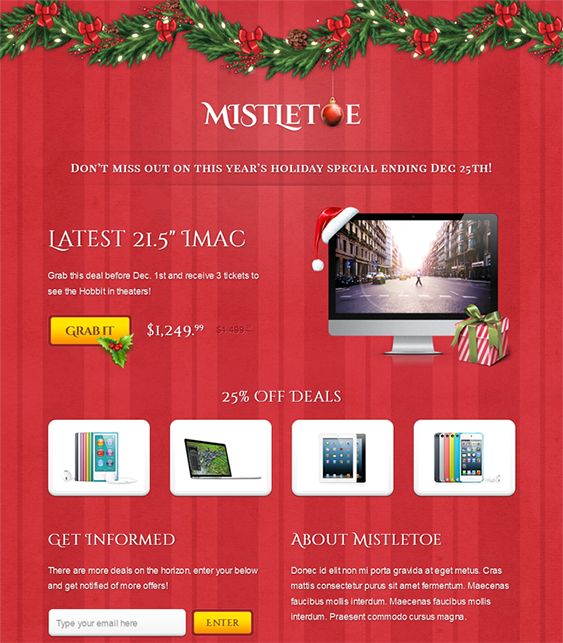
Connect your email to seasonal events
In email marketing, it’s important to be at the right place at the right time. It’s no secret that sales rates in December get higher than ever, all because of Christmas and New Year’s Day.
Marketers and salespeople can use holidays to their own advantage. For example, think about how your solutions can be linked to certain events. Try to be creative with some fresh ideas.
Tip: if there’s no creative spark, sign up for mailing lists of a few brands, and you will get inspiration delivered straight to your inbox.
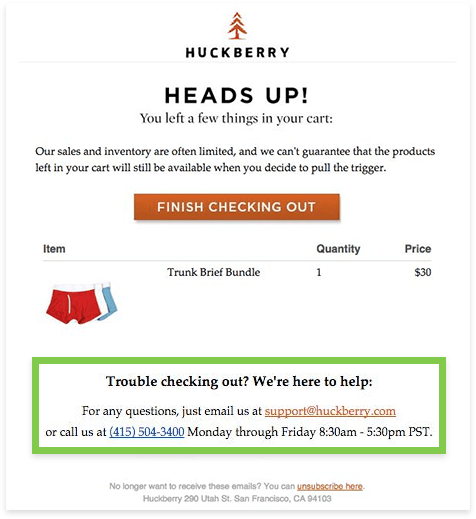
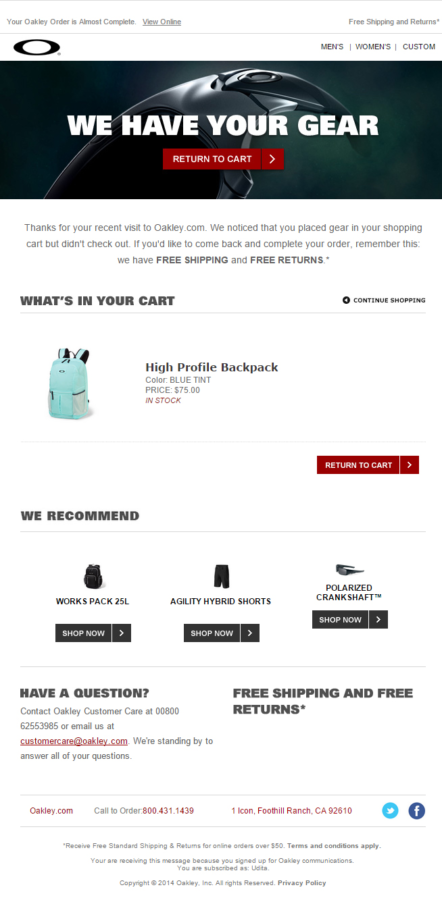
Write Cart Abandonment letters
It’s a good method to reach out to prospects who visited your site, added a product to the cart, and left without purchasing, and turning them into customers.
Cart abandonment letters are an extremely powerful tool for e-commerce practices. Statistically, 68.9% of shopping carts end up being abandoned, and 30% of sales are possible to be recovered with such a letter:
For additional efficiency, consider adding a promotion coupon to the letter or offer free shipping to motivate people to check out.
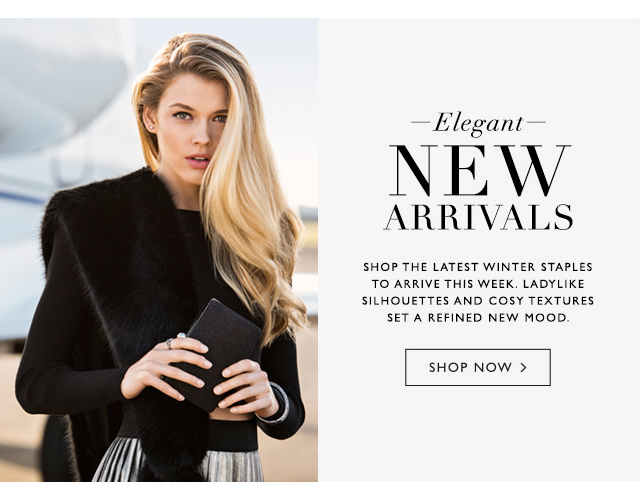
Let your subscribers know when new goods arrive in the store
Of course, in order for you to win sales using this technique, you have to update your stock frequently and inform your customers about the new arrival with the help of one of the many email reminder services. Also, it’s more efficient if the goods are something to shout about: a clothing brand everyone was asking for, a gadget that is popular on the market, etc.
Speaking of examples of Stock Update emails, the picture below is a good one:
Segment your emails
These days personalization matters. People get piles of emails, so they only get interested in the ones that respond to their interests and which match their experiences.
However, if you have a large number of readers, it’s hard to write an email that could meet all their needs. That’s why segmentation can come in handy.
You can make segmented lists based on different criteria:
- hobbies of your subscribers;
- behaviors (groups of products they browsed);
- stages of sales funnel consideration, ready-to-buy, etc.);
- location (newsletter for Americans, Russians, etc.).
Odds are, segmentation will dramatically boost up your return on investment (ROI). At the very least, the opening rate will be higher than it was before. Why? The answer is simple: people are exhausted of being buried in tons of irrelevant emails. Take a look at the following data:
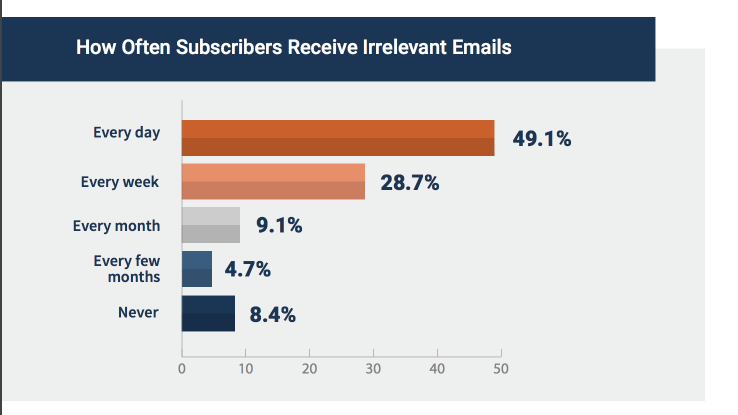
As you can see, almost 50% of respondents get irrelevant emails daily. Most of them end up in the Spam folder for different reasons:
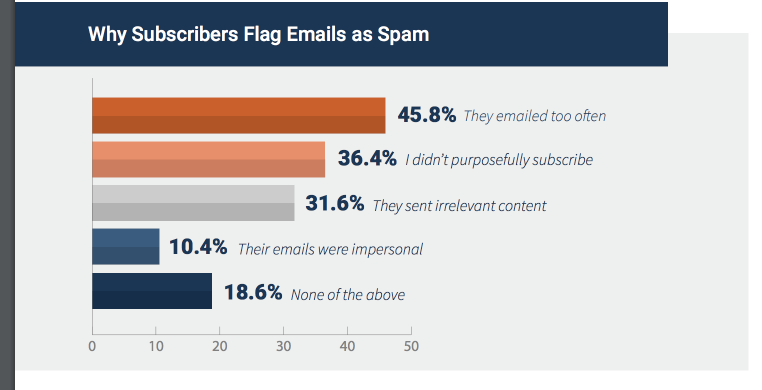
Being flagged as Spam is one of the worst nightmares that could happen to your email campaign. It can drop your deliverability, and subscribers won’t even get your next letters. An effective way to avoid this is to employ CRM, thanks to which the letters will always get to clients’ inboxes. This ensures that your letter will be seen and significantly increases the chances that it will be read.
If you segment letters, your subscribers can get news about the offers that match their interests. A research conducted by Technology Advice determined several ways for email marketers to improve their strategies.
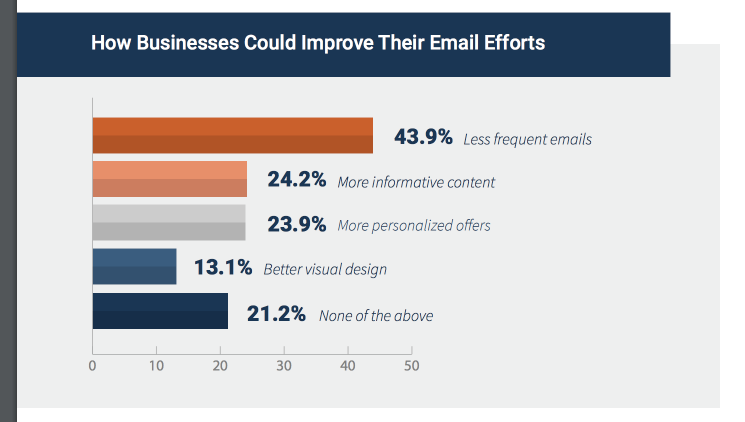
Do you know what is good news here? Email segmentation covers top three points, therefore, immensely improves your marketing strategy.
Reward customers for being loyal and re-engage the old ones
Do you have people who have been consistently buying your products during the last year? Email marketing is a great way to say “thank you”. Here are some ways to do it:
- a “thank you” letter;
- a gift card of a certain value;
- a free product.
This technique will get you some devoted fans and brand advocates.
If you have old clients who haven’t bought anything from you during the last year, use email reminder service as a re-engagement tool. Send your old customer a gift card to remind them that you are there for them.
Segmentation Via Shopping Behaviors
The idea of segmentation via shopping behaviors is somehow similar to cart abandonment emails, but not by all means. The idea behind this is to reach out to the customers who visited your website, even if they didn’t add anything to the cart.
This algorithm has been implemented by a significant number of retailers all over the world. It is very efficient as a reminder for people who might have forgotten to check out because they switched to some other activity.
Send follow-up emails
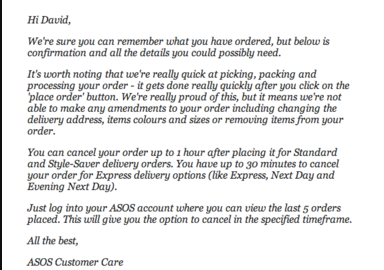
Most shops don’t deliver products right after they’ve been ordered online. Odds are after your clients made a purchase, they’ll have to wait for a while.
Don’t leave them disoriented. A follow-up email is a great way to keep your client posted and inform them on what they can do afterward. Here’s what you can write about:
- thank a client for a purchase;
- update them on the status of their product;
- remind that you have customer support ready to answer any questions.
A follow-up email is quite a little detail, but it’s a great way to keep in touch with your clients.
Ask Subscribers For Insights
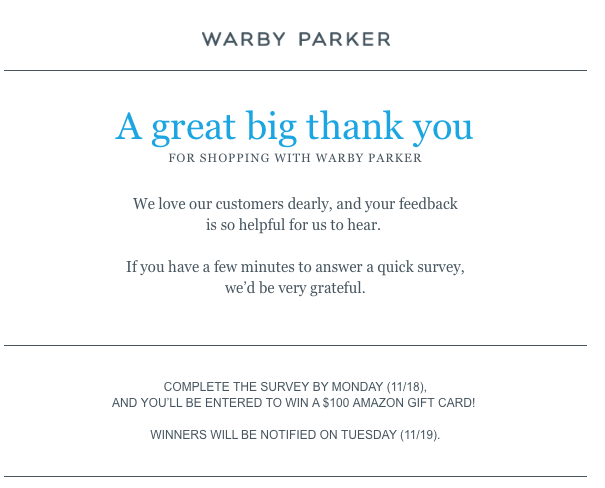
This is by far the most productive way to develop your email list: asking the readers themselves to influence the business they deal with and the service they receive.
This strategy is winning because of its transparency. A user can know what to expect from your brand, therefore your emails won’t get high rejection rates or be flagged as Spam.
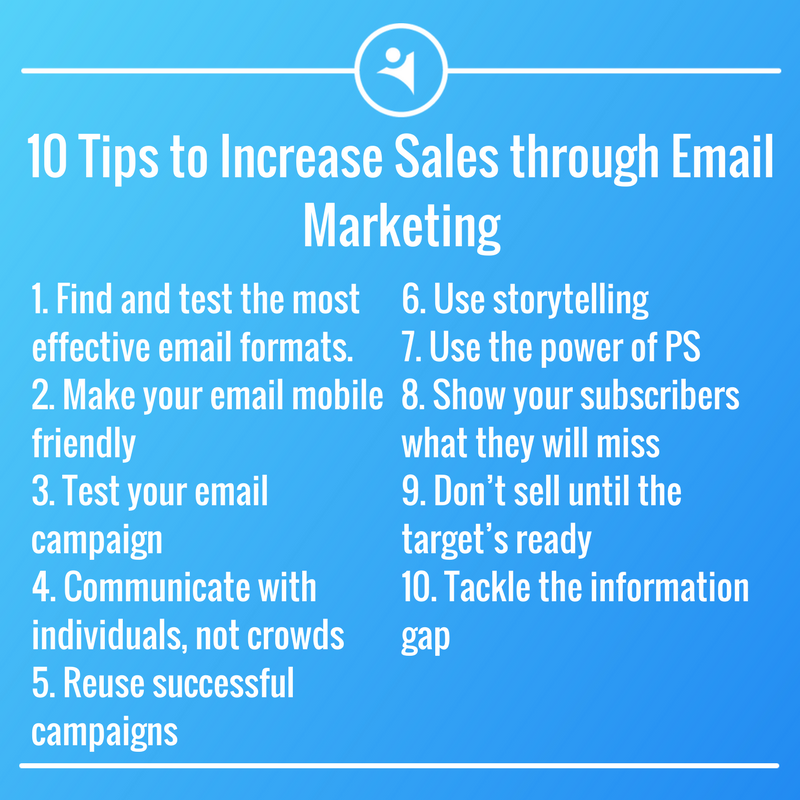
2. 10 tips to increase sales through email marketing
So far we have looked at the importance of email marketing, how sales can be increased with its help and what efficient practices there are. Now, let’s go through the tried-and-true tips to generate even more revenue with the help of email marketing.
1. Find and test the most effective email formats
The advantages of plain text:
- Lower risk of being marked as spam. Due to the flood of promotional emails with pictures, videos, and links, spam-checkers are now very cautious regarding rich HTML. Plain text, as well as basic HTML, don’t stand the risk of being considered spam.
- Suitable for mobile devices. Plenty of modern smartphones display nothing but text. By sending a plain-text message to subscribers, you can be sure that they will see it on their devices just as you intend them to be shown.
- More personal. Plain text emails are perceived as much less commercial than bright HTML-templates. You’ll be creating the effect of personal communication, hence looking more trustworthy.
The disadvantages of plain text:
- Limited forms of content supported. You can’t use bright pictures, GIFs, links, and videos. Therefore, the text is your only hope of winning your subscriber’s heart. Plain text emails are not visually powerful, therefore you’ll have to work twice as hard on your copy;
- Lack of visual appeal in displaying links. In order to put a link in a plain-text email, you’ll have to fully type it. Since some links are long enough with strange characters in them, and most of them don’t look pretty, it may be hard to encourage the reader to click them.
When should you use HTML?
It’s clear that you need minimal efforts to write a plain text email. With HTML, however, you’ll need someone to code it for you, optimize it both for computers and mobile devices, test it on different screens. Sounds like a lot of hustling. Is the result worth all the trouble?
There are some undeniable advantages of HTML emails that you should take into account:
- They promote brand awareness. In a plain text email, you cannot put your brand logo, images, custom fonts, etc. HTML opens a lot of visual possibilities, so the reader can remember your company better.
- Strong visual appeal.HTML-emails are bright, fancy, and captivating. You can challenge your creativity adding images, GIFs, and videos of all kinds;
- Easier for a reader to scan. Most of the HTML-templates are designed in the way that it’s not even necessary to read them. Your reader can just scan the letter and focus on the most important parts (for example, the offer). Nowadays, when most of us have a short attention span, having a chance to read emails in few seconds can be a huge advantage to your subscribers;
- You can use clickable buttons and hyperlinks.With the help of HTML, you’ll be able to format the link the way that’s going to be the most appealing to readers. Make it either as a hyperlink or as a button;
- The possibility to measure the efficiency of performance. With HTML-emails, you are free to use all kinds of metrics: open rates, click through rates, etc. You’ll always know exactly how your campaign is performing.
Disadvantages of HTML
- Takes much more time and effort to create. You’ll either need to dive into coding yourself or hire someone who can do it for you. Also, the code should be as clean as possible, otherwise, welcome to the spam folder;
- Is associated with promotional emails. Most of HTML-emails your readers get are promotional. Therefore, our trust to beautifully coded and bright letters is quite low. Chances are, no one will even read an HTML-email.
Basic HTML vs Rich HTML
As was mentioned above, plain text can outperform HTML due to the two main reasons: people feel suspicious about bright letters with lots of pictures, buttons, etc., and spam checkers filter HTML.
However, those problems usually come up when we think of Rich HTML format. It’s the one that’s all bright and shiny, like this:
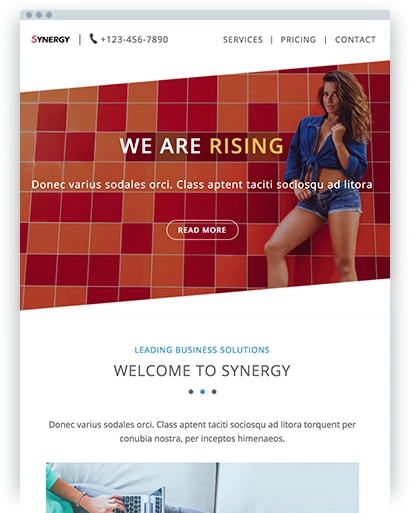
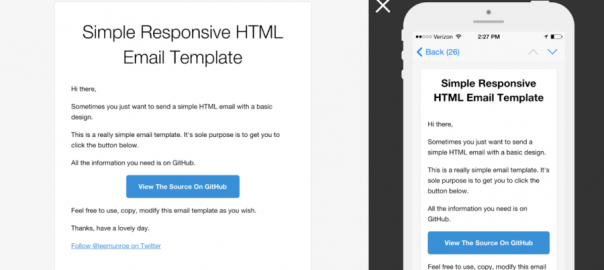
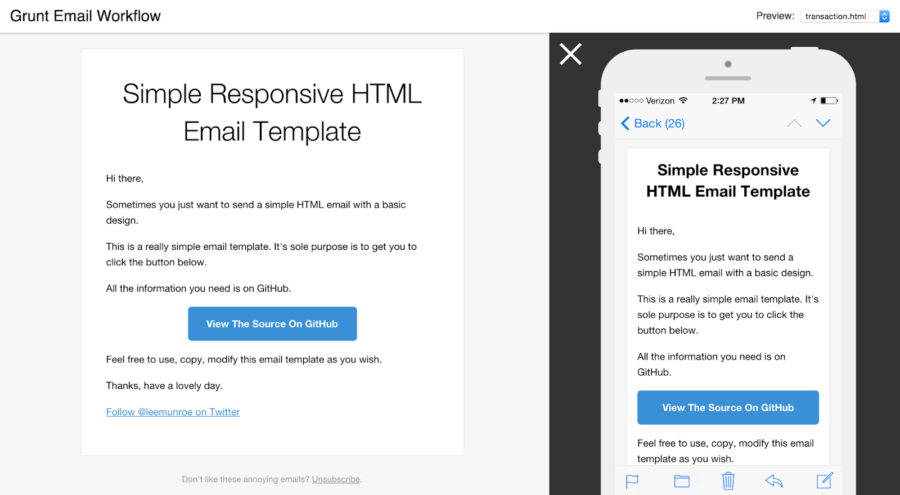
If you don’t want to appear aggressive, consider using basic HTML. The difference between two formats is that basic HTML is, in fact, your average plain text email where HTML is used only to add several simple elements, such as headlines and clickable links.
What do your subscribers think?
To every format, there are pros and cons to consider. Sometimes it’s not that easy to make up your mind. Here’s a solution to that: find out what your readers want to see in their inboxes.
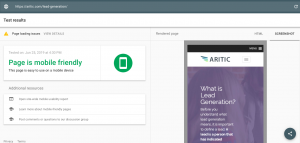
2. Make your email mobile friendly
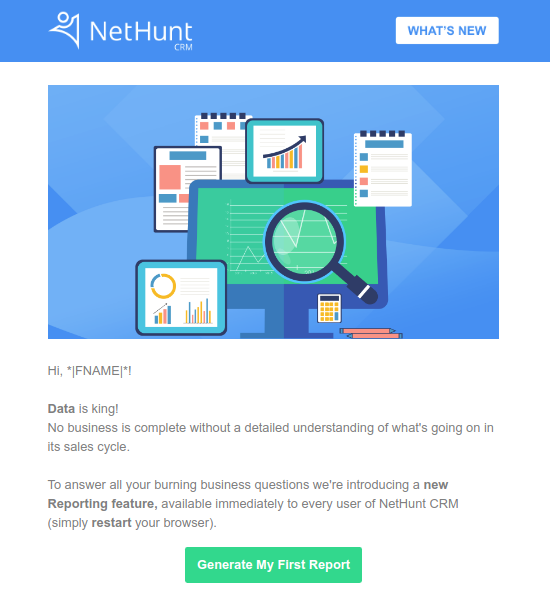
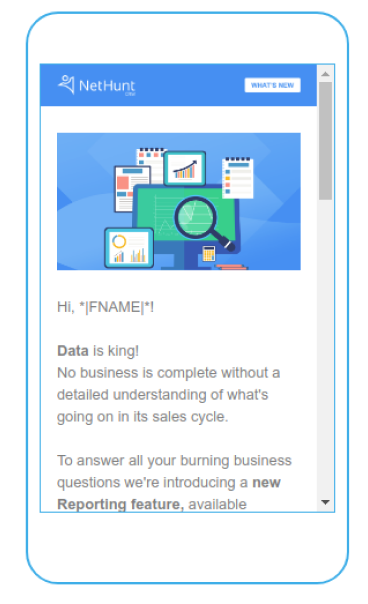
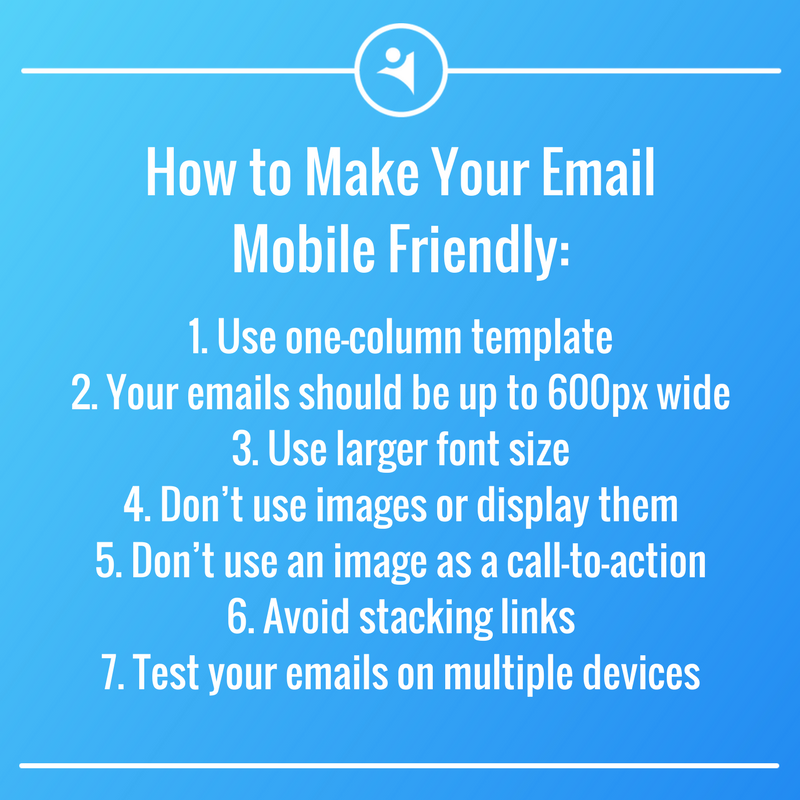
Among the other tips to increase sales with email marketing, this is probably the most important one. It is a crucial thing to remember about because over 60% of people read emails using mobile clients. Good news is making your email mobile friendly is really a walk in the park. All you have to do is to follow some simple tips:
1. Use one-column template
Mobile screens have limited navigation possibilities. Therefore, consider creating your letter using a single column template. It’s compatible both with tablets and phones and is more straightforward for different email clients.
2. Your emails should be up to 600px wide
These days, most of the modern gadgets can handle responsive templates. However, on less recent devices, viewing a complex design can still be a problem.
In order to deliver any notification or news to your subscriber in its best quality, we suggest you keep your emails up to 600 pixels wide. You can do it by setting a “width” attribute or a CSS width property.
3. Use a larger font size
10 px font is hard to be read even on a computer. On mobile gadgets, there is a tendency that small fonts become even smaller. That’s why you should use 16 or 18 px for a newsletter. 14px font is fine as well.
4. Don’t use images or display them
When people use mobile Internet, it’s mostly 3G. So, in order to load an image, your subscribers will need to use more traffic and subsequently spend more money.
The simplest way around is to reduce the number of images. You won’t suffer much. On the other hand, if visuals are important to you, think about optimizing them accordingly.
We recommend that you shrink the image by 50% and compress it slightly. Also, if you have some coding skills (or someone on your team does), apply the practices of responsive coding.
5. Don’t use an image as a call-to-action
Some email clients only show images if they come from verified addresses. If you state your CTA in a form of an image, and it’s not displayed, congratulations, you’ve lost the most important part of your email.
If you have decided to go with an image for CTA, don’t forget about ALT-tags. Make sure each your alt-tag precisely reflects the message the image would’ve brought.
6. Avoid stacking links
The finger tap is not half as precise as the click of the mouse. When you put a stacked link in your emails, it’ll look like this:
Link 1
Link 2
Link 3
For a user who reads on a mobile device, it’s going to be extremely tough to click the right link. Instead of the first one, they can accidentally tap on the second or even third. Irritating.
If you need to include multiple links, the solution is to separate them with text, images, or blank space.
7. Test your emails on multiple devices
Of course, it doesn’t mean that you have to buy phones with different screen sizes. There are tools such as Litmus that will help you see how a letter will look on different devices.
In order to run such testing, you’ll only need to have an HTML-template of your email.
3. Test your email campaign
It’s important to be sure that your email is proofread before you hit “Send” in your email reminder service. Hyperlinks that don’t work, pictures that don’t show up, a <b> tags that are somehow left out in the test, and spelling mistakes: all this can jeopardize your chances of winning your next client over.
Double-checking your email campaigns can be stressful: you don’t know where to start or what to look for. That’s why we came up with a simple yet helpful checklist to spare you the trouble:
- Start with copy: grammar, spelling, the accuracy of dates and time, capitalization, punctuation, etc.;
- Your email address;
- Subject lines: typos in subject lines are the worst. Don’t lose face because of them;
- Send yourself a test email and make sure it looks okay because that’s how your subscribers will see the letter;
- Look for design flaws in both desktop and mobile versions;
- Send your test to a colleague. A fresh set of eyes matters, so ask someone to proofread your letter.
- Double-check subscribers lists and segments: is everything okay?
- Press “Send”, you are golden.
4. Communicate with individuals, not crowds
You don’t talk to companies, departments, or any other crowds. You talk to a specific guy or girl, face-to-face. The personalization of your emails should go beyond using someone’s first name. In order to do that, here are some things to take into account.
1. Find something common that’s uncommon.
We unite because of our interests and feelings. And so do your readers. We all tend to trust someone similar: perhaps, it goes far back to the time when people lived in tribes and preferred sticking with the ones from their own village.
However, looking for a common characteristic of your subscribers is not that easy. Perhaps, your first temptation will be to look for something that’s 100% true: “We know you like listening to music”, “You enjoy having free time”.
There’s nothing unique in the statements above. Almost everyone can relate to those things but they won’t unite you.
Hint: look for something you have in common with your subscribers but it’s not particularly common.
2. Find some mutual connections
Another way to gain trust is to underline some connection that you and your subscribers have in common. There are two ways to look at it:
- Find a real offline connection. Maybe, you collected subscribers’ emails because they were the members of a conference. Then your subject line can be: “I saw you at the [Name of Event’]”. Even if you didn’t, there were thousands of people attending events, so how can your subscribers check?
- Refer to someone they respect and trust. For example, as you reach to a subscriber, name-drop a trendsetter one reads. Speaking of that, why not to write something like “What have we learned from Neil Patel?”. When a subscriber sees a familiar name, she’s more eager to read the email and relate to it.
3. Use subscriber’s name (and MORE than once).
Addressing a subscriber using their first-name is already a mainstream. However, it rarely goes beyond the subject line. Such a small detail as mentioning your reader by name more than once can have a surprisingly good effect.
4. Use praise for personalization
Check whether your readers have had some big achievements lately. Read more about them. Then praise your subscribers in an email.
Try to go beyond “I’m amazed by you”. That sounds a little bit hollow, doesn’t it? It’s better to go with something like “I’m amazed you won [the name of award].
5. Reuse successful campaigns
It’s totally okay to be using the same letters twice. This time, you’d be reaching people who didn’t read your email the first time. Maybe the timing was wrong or they were too busy to open the email.
Give your successful campaigns a second chance. It’s going to save you time, and results won’t be disappointing.
6. Use storytelling
People love listening to stories. In fact, that is the reason why we play games, watch movies, and read books. In marketing, storytelling works as well. However, when you sell with stories, they should be the ones worth listening to.
Here are some tips that will help you incorporate storytelling into your email marketing strategy:
1. Don’t make up fake stories
People can feel when they are lied to. We can sense if someone is trying to fool us. More importantly, we hate being fooled more than anything else.
That’s why you should aim for true stories in your campaign. Of course, it might seem that you have nothing to tell. In that case, take some details, feel free to exaggerate, but leave the base of your story real.
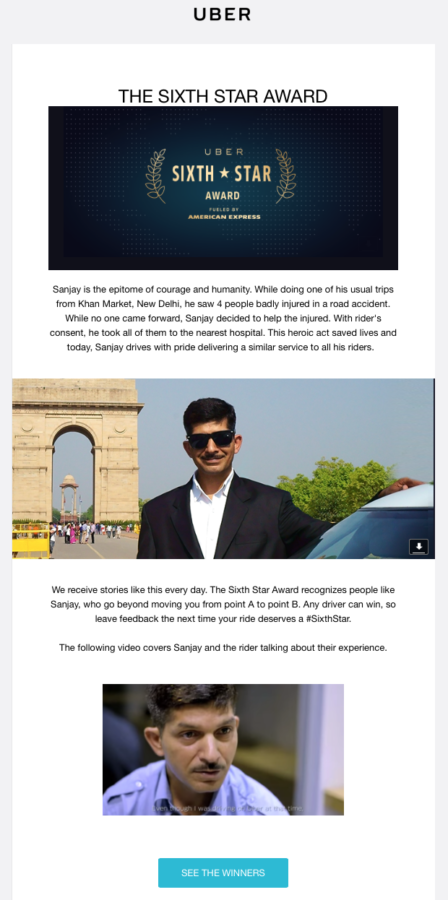
Take a look at how Uber does it. They had a beautiful story about a driver, who saved passenger’s lives. It doesn’t sell the idea to order Uber but implements the message that Uber is safe. It’s much better. Now people will want to call Uber.
2. Tell your customer’s stories
“Happy clients” is the easiest kind of stories. Here, you don’t need to write a long story or be a big brand. Even ambitious yet small companies have clients that enjoyed the product and will be happy to speak about their experience.
7. Use the power of P.S.
It’s also one of the fine marketing tips to increase your sales. As you know, P.S. stands for Latin “post scriptum” which translates to English as “written after”. We are using it in email marketing a lot, all because first and last sentences are usually the ones people read.
Here’s what you can add to your P.S.:
The hyperlink. The hyperlink. You can include the URL in your P.S. to increase the chances of the click. It’s fine to mention your selling points in Post Scriptum, but make sure they have a new angle than the ones you’ve written about before.
Create urgency. P.S. gives your email the feeling of immediacy. Therefore, it’s a good chance to talk about limited offers and promotions.
The Bonus. It’s by far the most effective kind of P.S. It gives your readers a sense of surprise. They’ve been reading the letter, haven’t expected anything, and then boom, you have free stuff for them.
Testimonials. P.S. is basically your last chance to reassure an indifferent subscriber and turn them into your customer. So, an endorsement from someone who’s already tried the product can be a fine approach to change one’s way of thinking.
8. Show your subscribers what they will miss
According to the article “How loss can be a Winning Strategy” posted by Neurosciencemarketing, people are so scared of losing that it even pushes them towards an irrational and illogical decision. We are all loss averse, and marketers can use it.
The first thing you can do is simply reframe some data. Everything can be put as a win or as a loss. For example, you have $ 50. I’d say you can keep $ 30 or gamble with a risk to lose all you have. It’s non-optional. As it turns out, most people are willing to keep the money they already have.
Here’s another scenario. You have $ 50. I say you have to either lose $ 20 or gamble and risk losing all your cash. The situation is the same: even in case you lose $ 20, you still get to keep your 30 bucks. But the perception changes everything, and 62% of people are now willing to gamble.
That’s the approach you can use in email marketing: frame the alternative to buying as a loss.
9. Don’t sell until the target’s ready
It’s like winning somebody’s affection. Until you do, you get to be a friend, a teacher, a shoulder to cry on: anything but a salesperson. Sell yourself before you start pushing the product.
10. Tackle the information gap
There is a powerful force that gets people to as far as abandoning basic survival instinct, not to mention opening the email. It’s called curiosity. If you want to increase open rate, appeal to your readers’ interests. Think of some ways to wake up the sense of curiosity. Those could be:
1. Outperform the expectations.
The idea is to write a subject line that will turn readers’ world inside out. Basically, you have to turn this headline:
“How To Increase Sales By Using Email Marketing”
into something like this:
“1 Campaign, 6 Emails, 20% Higher Sales Rates”
The second subject line makes readers wonder about something. It gives something you don’t expect.
According to the research by Loewenstein, curiosity increases if you cover someone’s knowledge gap in the are of interest. So make it happen.
2. Tease your reader
There has to be a little bit of teasing. It’s not irritating, but interesting, and tempting. In order to do that, assure that you are talking about something extremely new. In the same research, it says that people assume that they know a lot more than they do in reality.
However, if you offer some unique knowledge that your subscriber can’t possibly get elsewhere, you’ll increase their curiosity.
Compare these subject lines:
“5 Lessons For Email Marketers”
and
“5 Lessons For Email Marketing Only Gary Vaynerchuk Can Teach”
In the first case, a person can assume that he/she already knows those 5 things. The second one is backed up by a trusted source, therefore giving much more value to the content.
These tips will help you increase conversions and click-through rates of your email campaign. Also, you can do email marketing even more efficiently, if you have additional tools to help you.
3. What can you expect after using these tips?
If you implement everything we’ve talked about, with the best email marketing practices to increase sales, you should have a really positive impact on your business. Here’s what you’ll experience:
1. High engagement and communication
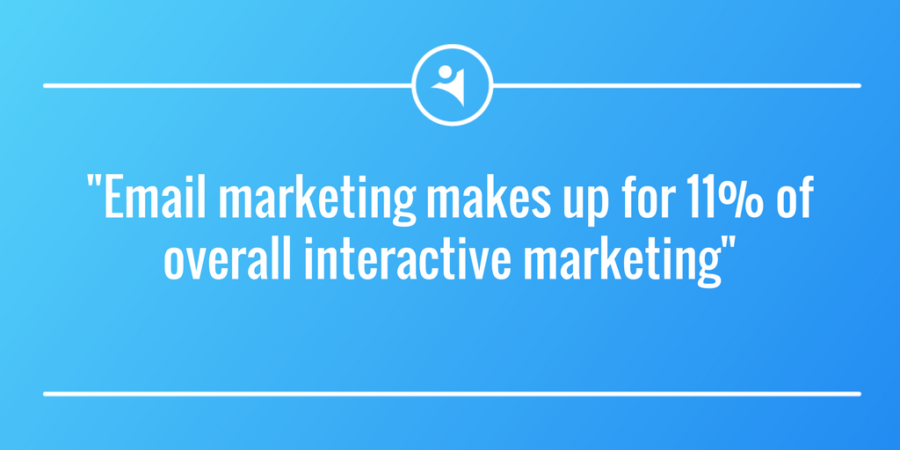
Email campaigns will begin the interactions between customers and your brand. You will get the link clicks, email replies with customer opinion, and better brand awareness. According to Forrester Research, email marketing makes up 11% of overall interactive marketing.
You’ll connect with your clients and gain their dedication.
2. High Conversions
The study by Fluent shows that over 75% of people buy goods after they get an email from the seller. If you succeed in creating a good selling copy for your email, there is a good chance that your work will pay off.
3. Keeping in touch with all customers
Do you know how sometimes a person buys something from you and fades away? With consistent email marketing, it won’t happen so much. Now, you are constantly reminding your customers that you exist. You announce new services and products, update them on the latest news, so if they need something, they are likely to come back to you.
As for a cheap and relatively easy form of marketing, email marketing has awesome effects on your business if you use it right.
4. Conclusion
If you are looking for ways to increase sales with email marketing, you have chosen the right way. It’s cheap, easy to manage, and extremely effective.
There are some important strategies you should follow: try different formats of letters, segment your subscribers, and personalize your emails. The help of email reminder service, special tools and software will also come in handy.
This post originally appeared on NetHunt CRM Blog.
Digital & Social Articles on Business 2 Community
(52)