
By Marcus Collins
Fans, tribes, neotribes, community, networks, cultures of consumption, and all the many monikers that go by different names all amount to the same thing: people. If you want to get people to move, then you must focus on people and their proclivity to connect. These connections, of course, are fostered and fortified by the cultural characteristics that govern said people. Adoption into these cultural characteristics catalyzes collective behavior and inspires people to move.
The first established brands served as a way in which consumers could distinguish which products belonged to which company. The brand mark served as a “legal mark” of ownership. Over the years, marketers used value propositions and positioning statements from psychology research to differentiate their products from those of their competitors, which evolved a brand from a legal mark to a “trust mark”—a mechanism that absorbed uncertainty for consumers. In this case, the brand mark provided consumers with a Good Housekeeping seal that assured them that the product could be trusted to perform. In this way, the benefit of brand was a mark of trust. Later still, marketers would work their wizardry to evoke emotions among consumers to elevate the brand from a transactional relationship, fortified by trust, to an affinity-based relationship built on love. Kevin Roberts, chairman and CEO of Saatchi & Saatchi advertising agency, aptly referred to these brands as “love marks.” But the brands that dominate culture (and subsequently commerce) have evolved into “identity marks”—the marks we use to communicate who we are, what we believe, and where we reside within the stratified social world. These signifiers—like Apple, Supreme, Nike, Carhartt, Ben & Jerry’s, Patagonia, or even Bernie Bros, MAGA, and QAnon—are more than just legal marks, trust marks, or love marks. They are receipts of identity that people use to project themselves to the world based on the meaning and ideological associations these brands carry, and their congruence with the people who consume them. The literature refers to this as self-concept theory, where people purchase brands that are consistent with, enhance, or in some way fit well with their conception of themselves.
The resulting effect of this phenomenon will no doubt drive the next evolution of brand or—dare I say—the future of brand: brand as “tribal mark.” Naturally, the brands that people use to communicate their identity are ripe to be elevated from an “identity mark” to a “tribal mark” by fostering and facilitating the people who subscribe to the brand’s ideology. You don’t need a crystal ball to predict this; it’s written on the walls. The longest standing institutions in the world—government, military, religion—have understood this since the beginning of time., and they’ve leveraged the culture of the tribe to keep their members engaged and catalyze collective behavior among them. We’re not in a state of identity-based politics. We’re battling tribal politics, where people congregate and act in concert with people like themselves.
At its core, the notion of people subscribing to communities based on shared interests and consumption activity is not a new phenomenon. People have long congregated within groups that share similar cultural characteristics, all within the context of commerce–think H.O.G.s, Trekkies, sneakerheads, the hip-hop community, the Beyhive, Swifties, or even fans of the movie Twilight, where people claimed membership on Team Edward or Team Jacob. This is quintessential human behavior; we are social animals after all. The difference today, however, is that contemporary technologies like social networking platforms–and even those to come, like nonfungible tokens (NFTs) and other Web 3.0 technologies–create greater opportunities to operationalize intrinsic human behavior.
While Jack Dorsey makes predictions about the future, I don’t presume to be so clairvoyyant. There are no crystal balls at my disposal that allow me to see what’s ahead, but the future is crystal clear–the brands, companies, organizations, and entities that will win will be the ones that activate their tribes. Likewise, the future of NFTs is intrinsically connected to the future of brand because they provide an operationalized receipt of membership into the tribe that enables the brand to facilitate the community and foster loyalty among its members. On its surface, the “token” constitutes ownership of a unique digital asset. However, this receipt of ownership also provides access to something far greater. Like the gold coins that grant entry into the New York Continental Hotel of the John Wick cinematic universe, the token empowers its owner with membership within a community. It is, ostensibly, a cultural artifact of authentication that signifies that you are “one of us”–cue the Gobble Gobble scene from Freaks. This isn’t about masses; it is about subcultural communities.
This is where things get interesting. The “T,” in this case, isn’t really for “token”; rather, it’s better suited for “tribes.” NFTs arm marketers with a technology that facilitates tribal membership such that brands can design road maps that benefit token owners. The actual asset is inconsequential relative to the possibilities that come from fostering community, especially for brands or organizations that already have tribal associations, like Apple, the Ford F-150, Patagonia, sports teams, nonprofits, or even political parties. Imagine a Lakers NFT that grants postgame access to the court whether your seats are courtside or nosebleed. As of this writing, Coachella just announced an NFT collectible that gives fans front-row access to Coachella for life. The opportunities are truly endless–not just the perks per se but the way in which brands, artists, or institutions activate a tribe of people who see the world they way they do. Not only is this the true opportunity for brands and NFTs, but it is also the future of brand writ large.
The best marketers in the world understand this better than most. But these marketers don’t have ”marketing” in their title. Oh, no. Instead, they come from the world of politics, and they leverage the cultural influence of tribes (particularly the GOP) to get people to move–to vote, to adopt and villainize new language (like critical race theory), to accept and defend a lie (the Big Lie), or to refuse to wear a mask or take the COVID-19 vaccine, even if it kills them.
That’s not hyperbole, either. According to NPR research, the counties that voted 60 percent or higher for Trump in the 2020 presidential election had 2.73 times the COVID death rates of those that voted for Biden. The counties with even higher proportions of votes for Trump saw even higher COVID-19 mortality rates. Why? Because the cultural norm for the current GOP was to rebel against wearing masks and getting vaccinated. This was the expectation of members of the tribe of the GOP. Once the tribe adopted these cultural practices, even Donlad Trump himself could not change its course despite being the mouthpiece that preached the gospel of the tribe. The gospel must be congruent with the way that people see the world if you are to connect with them and get them to move. During a post-presidential tour with the fired Fox News host Bill O’Reilly, Trump told a crowd of conservatives that they should get vaccinated in an attempt to take credit for the efficacy of the vaccines’ protection amidst all the public discourse surrounding them. The crowd immediately began to boo him. The tribe had spoken.
This is not the future; it is today. The writer William Gibson is famously quoted as saying, “The future is already here–it’s just not evenly distributed.” This is, by and large, the ambition of this book: to provide everyone with the ability to harness the power of culture and leverage its influence to get people to move.
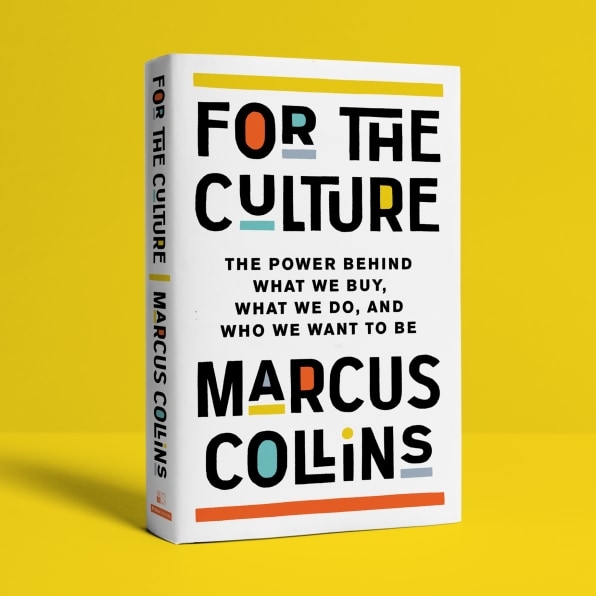
Excerpted from the book For The Culture: The Power Behind What We Buy, What We Do, and Who We Want To Be. Copyright © 2022. Available from PublicAffairs, an imprint of Hachette Book Group, Inc. Reprinted by permission.
(20)