
Trump’s promised 100% tariff on China is escalating the trade war to new, turbulent levels
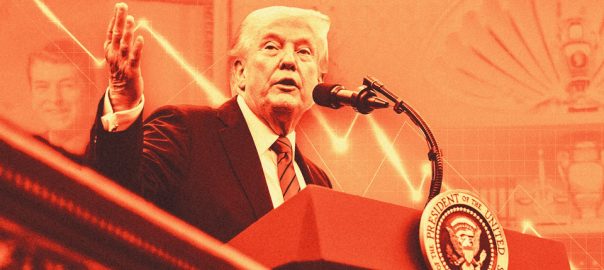
On Friday, U.S. President Donald Trump lashed out at Beijing after China said it would tighten control over rare earth mineral exports.
Sarah Bregel
The trade war
between the U.S. and China is heating up: On Friday, U.S. President
Donald Trump lashed out at Beijing after China said it would tighten
control over rare earth mineral exports, with the president saying he
would impose a new 100% duty on Chinese goods—”over and above” existing
tariffs.
The
reignited trade war has rocked markets, particularly tech stocks, with
the Nasdaq closing 3.6% down on Friday. Analysts are warning that the
escalation could lead to an even more economically turbulent market
outlook than was seen earlier this year after Trump made his “Liberation
Day” tariff announcement. Trump made the threat on social media,
writing that he would impose the new 100% tariff on Chinese goods by
November 1. Trump also said that the U.S. would limit exports of “any
and all critical software.”
“It is impossible to believe that China would have taken such an action, but they have, and the rest is History,” Trump wrote.
Earlier on Friday, Trump indicated he might cancel
an anticipated meeting with China’s leader, Xi Jinping. “One of the
Policies that we are calculating at this moment is a massive increase of
Tariffs on Chinese products coming into the United States of America,”
he said on Friday in a post. “There are many other countermeasures that
are, likewise, under serious consideration.”

Why is the trade war escalating again now?
Washington’s
latest tit for tat comes after China announced new trade curbs on rare
earth minerals—the country controls the vast majority of these
materials, which are vital for technology manufacturing, as well as for
making magnets, batteries, and vehicles. Trump said that China’s move
would “clog” the markets, and that Beijing was holding the world
“captive.” Analysts have echoed the president’s concerns, with many
cautioning that China’s new regulations will have major impacts for the U.S.’s ability to access materials necessary for technology manufacturing and even military equipment.
“These
restrictions undermine our ability to develop our industrial base at a
time when we need to. And then second, it’s a powerful negotiating
tool,” a critical minerals analyst at the Center for Strategic and
International Studies said, per NPR.
Tariff threats roil markets, and analysts are worried
U.S.
markets responded quickly to the new tariff threats. On Friday, the Dow
Jones Industrial Average dropped 876 points, while the S&P 500 fell
2.7%, and the Nasdaq composite closed 3.6% down. Tech stocks in
particular took a hard hit: chipmaker Nvidia, Amazon, and EV-manufacturer Tesla fell by around 5%.
And
while the global economy has shown remarkable resilience so far in the
face of trade upheaval and Trump’s tariffs, analysts believe this
period of turbulence is far from over. “This is all a game of high
stakes poker going on between the US and China in this AI
Revolution as we are also seeing more scrutiny in Beijing around
Nvidia’s golden chips,” Wedbush Securities analyst Dan Ives said in a research note to clients.
Ives
added, “These moments we view as buying opportunities to own the
winners in semis, software, Big Tech, and the AI future as in our view
these tensions will not bubble up into a much more tense time vs. the
nervous period of time we saw in April.”
ABOUT THE AUTHOR
(7)