
Chris Liversidge on December 15, 2015

Link building remains the bedrock upon which long-term SEO success is built. Effectively using the wealth of data available to search marketers these days is the key to ensuring your inbound strategy beats the competition. Let’s take a look at a few tools and data points you can use to ensure you are one step ahead in your SEO campaign. I’m particularly interested in tools that drive actionable insights over and above simply benchmarking your current performance.
Identifying High Share Audiences
At its heart, a good inbound campaign prioritizes content that is easier to outreach to its target audience. One of the best ways to ensure this with your campaign is to find and target audiences that are highly active on social channels. BuzzSumo is a great tool for this type of analysis, as it compiles relevant metrics from the most valuable social channels and has an excellent API so you can further enhance its data. It’s also a great starting point, as its data is organized to return best-performing content — from a social perspective — by search term. This organizational structure means you can stream BuzzSumo into your workflow at the keyphrase level. This is especially useful for tying insights derived from the tool to underperforming or strategically important search terms. In essence, the driving force for where your audience targets come from is tightly related to your overall SEO (and, if you are running an integrated campaign, PPC) keyphrase strategy. So, for example, I may review a keyphrase gap that’s especially important to my SEO and PPC campaign from a dashboard using click-through data from AdWords and Google Search Console, like this:
Dashboard showing SERP behaviour for search terms across organic and paid search channels, as well as the conversion rate for that traffic for the landing page. [Click to enlarge.]
- Our average organic ranking is position 4, and positions 1–3 have exponentially higher click-through rates — so we would select this term for an inbound link-building piece.
- The click-through rate (CTR) organically on this term is lower than expected given its position, so we’ve scheduled time to review its snippet, update the on-page elements used to generate that snippet and test a better call to action (CTA).
- We are bidding that term into an efficiently-priced position three for paid search, but we are not seeing a “halo effect” general increase in CTR in either paid or organic search. In fact, the paid result is also performing lower than expected given its position — so it’s likely this ad is not complementary to the organic snippet. This ad is also scheduled for review to test a variety of CTAs that are complementary to the organic snippet.
- The landing page for this term converts at a higher rate than other related terms in this keyphrase set, despite poor CTR from the search results page. So landing pages for complementary terms are scheduled for A/B testing with this landing page format and CTA content matches.
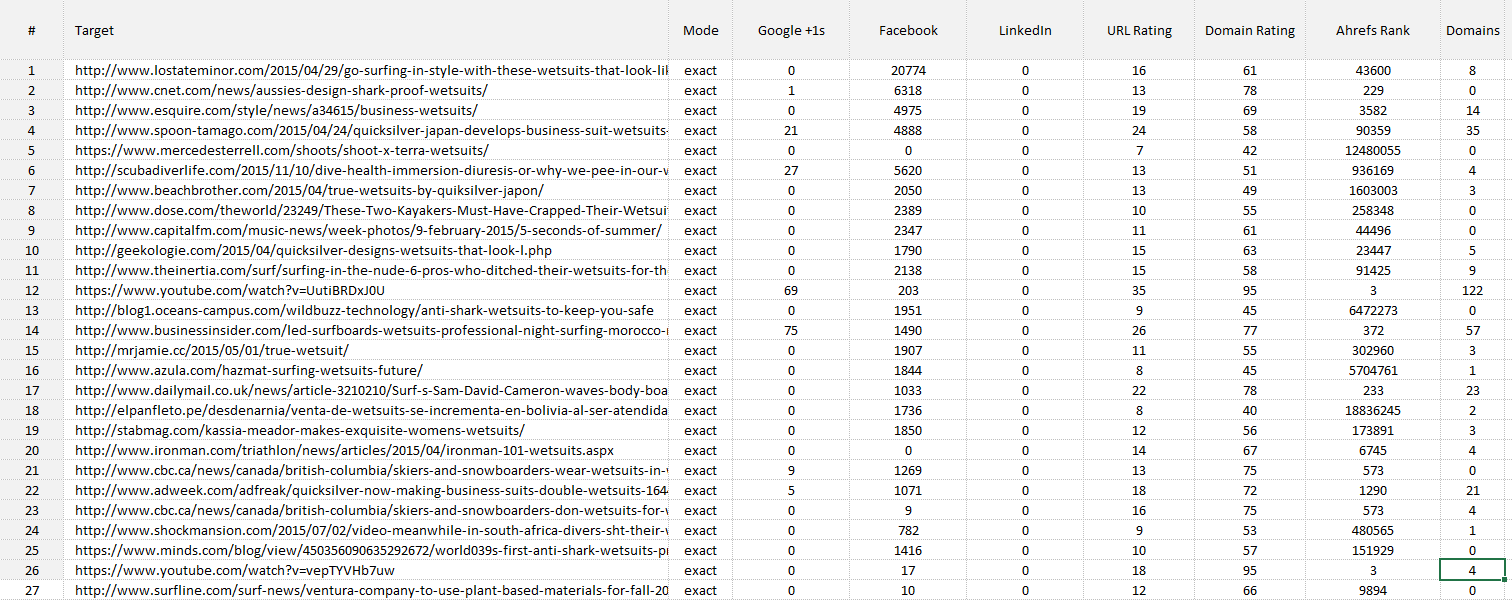
BuzzSumo data is matched against keyphrase terms, and the API can be used to export and cross-reference against other sources of data. Here, we see data for popular wetsuit content also using Ahrefs data for segment analysis described below. [Click to enlarge.]
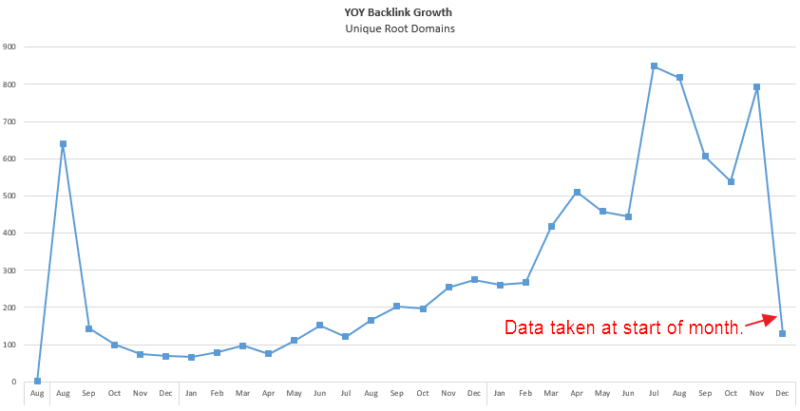
Understanding the link value over time for socially successful links helps refine your target audience and content better to those audiences that generate high-quality links over time versus just social amplification.

Understanding how links collate against a socially successful piece of content over time is valuable to understand the type of outreach required for success for a given piece of content.
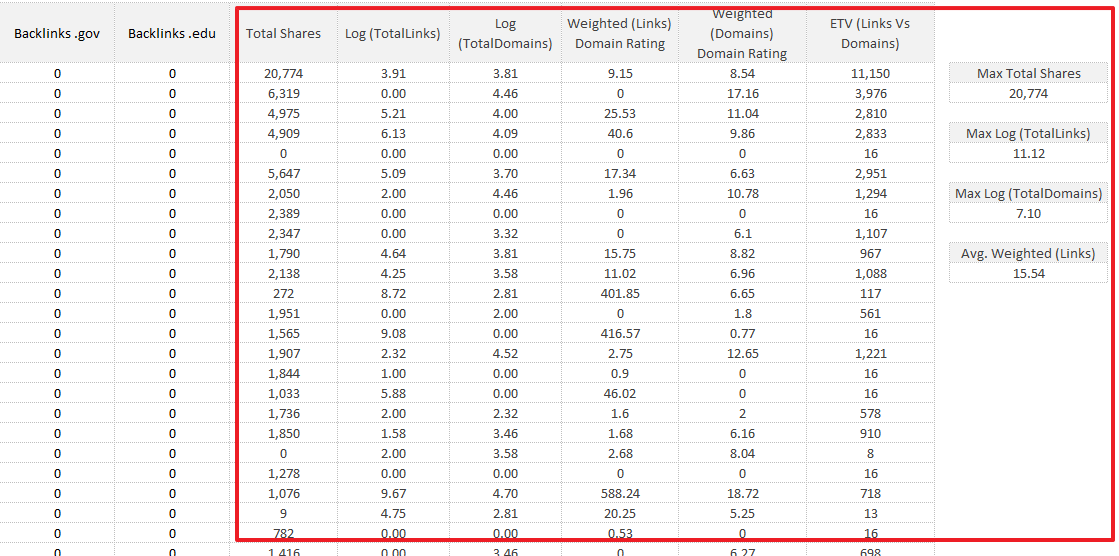
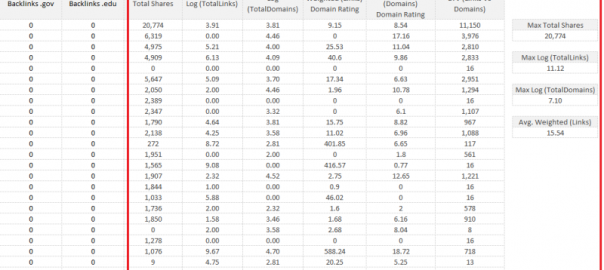
Calculating the Estimated True Value makes the analysis of content more meaningful by filtering out extreme cases. [Click to enlarge.]
Some opinions expressed in this article may be those of a guest author and not necessarily Marketing Land. Staff authors are listed here.

[Article On Search Engine Land]
(92)